When someone you love dies, deciding how to gather and say goodbye can feel overwhelming. Choosing between a celebration of life vs funeral comes down to what will best reflect their spirit and bring comfort to those who remain. Neither choice is better than the other, and understanding how they differ allows you to plan a farewell with clarity and peace.
In the first quiet days following a loss, families often wonder whether they are bound by certain rules or expectations. The truth is that ceremonies of remembrance have grown increasingly flexible over the decades. Whether you choose an established liturgical pattern, an informal gathering filled with music and shared stories, or elements of both, the essential purpose remains unchanged: to honor a life lived and surround one another with care.
Understanding the Traditional Funeral Service

A traditional funeral has served as a cornerstone of mourning across generations. Historically, this gathering takes place shortly after death, often within a few days to a week. The deceased person is present in a casket, which may be open or closed depending on family preference, religious teachings, and cultural tradition.
Traditional funerals generally follow a structured, recognizable order of service. In religious traditions—such as Latter-day Saint, Catholic, Protestant, Jewish, Eastern Orthodox, or Muslim faiths—the service is typically led by a member of the clergy or faith leader. Elements often include formal prayers, sacred music, scripture readings, and a sermon, alongside an obituary reading and family tributes. To learn more about how order and sacred ritual bring comfort across denominations, you can read our guide on funeral services in Salt Lake City for every faith and tradition.
The physical presence of the casket serves a distinct psychological purpose. For many, seeing the casket or participating in a viewing allows the reality of death to gently take hold. Following the funeral service, the community typically travels in procession to a cemetery for a committal service and burial or placement in a mausoleum. The atmosphere is solemn, quiet, and reverent, designed to provide a dignified space for collective grief.
What Is a Celebration of Life?

A celebration of life is a gathering focused primarily on remembering the joy, personality, achievements, and unique traits of the person who died. While grief and sorrow are naturally present, the tone leans toward gratitude for having known them. These events often emphasize storytelling, shared laughter, vibrant memories, and personal passions rather than strict ceremonial protocol.
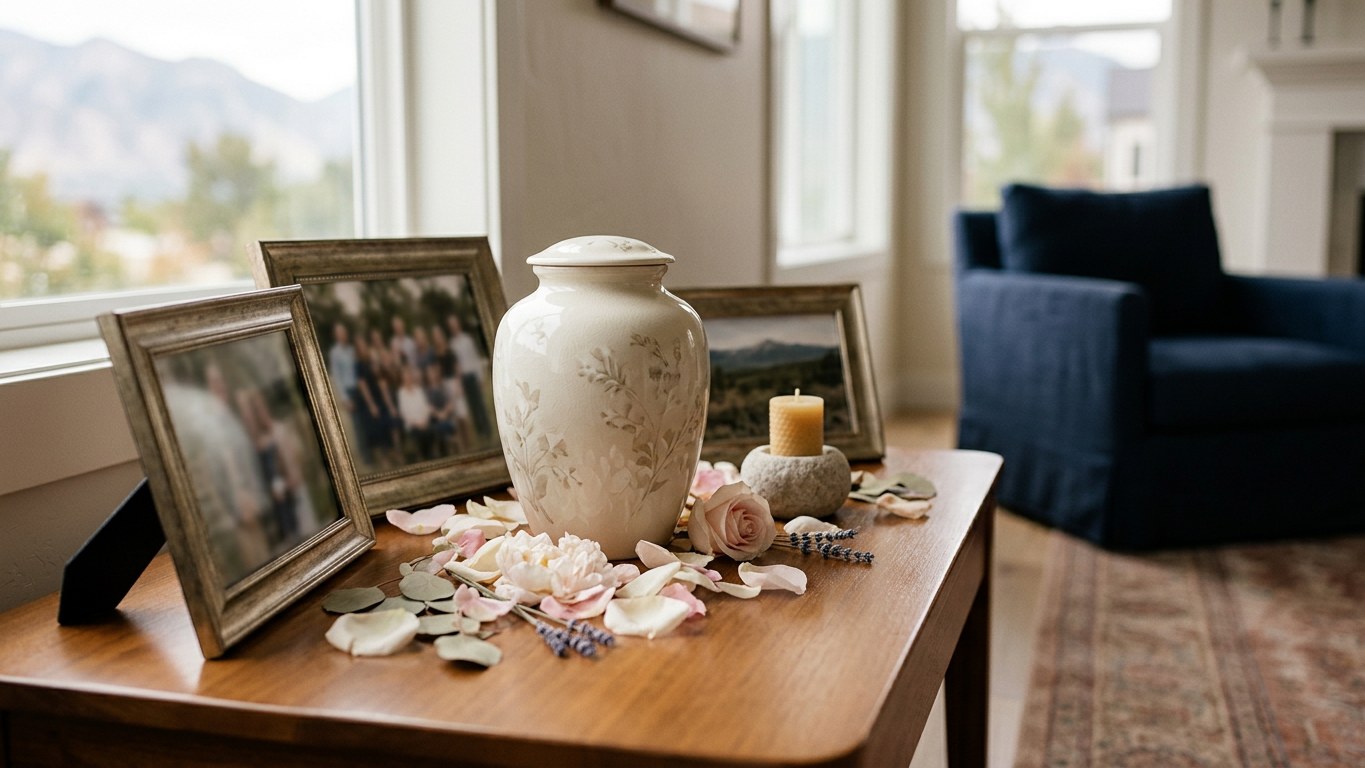
Unlike a traditional funeral, the physical body is usually not present in a casket at a celebration of life. Often, cremation has already occurred, and an urn containing the cremated remains may be displayed on a table surrounded by framed photographs, personal mementos, or artwork. In other cases, the gathering takes place after a private burial or without any physical remains present at all.
Because there is no urgency regarding the presence of the casket, a celebration of life can be scheduled weeks or even months after the death. This flexibility gives families extra time to coordinate travel for distant relatives, reserve meaningful locations, and assemble detailed personal touches. If this style of remembrance resonates with you, our comprehensive guide on how to plan a celebration of life in Salt Lake City outlines creative ways to shape such a gathering.
Celebration of Life vs Funeral: Comparing the Core Differences
To help you weigh your options during a quiet moment of decision-making, it helps to examine how the two styles compare across five essential areas: tone, structure, timing, physical presence, and setting.
1. Tone and Mood
A traditional funeral tends to be contemplative, quiet, and solemn. It offers a structured container for mourning, allowing mourners to express sorrow in unison. A celebration of life tends to be conversational and upbeat. While tears are completely normal at both, a celebration of life often encourages humor, upbeat music, and lighthearted reminiscences.
2. Structure and Order of Service
Traditional funerals adhere to an established sequence, often determined by faith doctrines or long-standing custom. Hymns, formal eulogies, and benedictions guide the attendees from beginning to end. In contrast, a celebration of life has an open format. A family may choose to have an open microphone for impromptu stories, a multimedia slideshow set to favorite songs, or interactive stations where guests write down memories.
3. Timeline and Scheduling
Funerals usually occur within a few days of death, which can sometimes feel hurried for families dealing with immediate shock. A celebration of life allows for an extended timeline. Families can choose an anniversary, a birthday, a holiday weekend, or a season that held special significance for their loved one, such as early autumn or late spring.
4. Physical Presence
At a traditional funeral, the casket is central to the room, situated near the pulpit, altar, or focal point. At a celebration of life, the center of attention is often an urn, a large framed portrait, a quilt, musical instruments, or items representing a beloved hobby or trade.
5. Venue and Environment
While traditional funerals usually take place in a church, synagogue, mosque, chapel, or mortuary, celebrations of life happen in a broad variety of settings. Families frequently hold them in community centers, private residences, parks, art galleries, reception halls, or botanical gardens. Dedicated facilities, such as Larkin's Le Jardin in Sandy or the Celebration of Life Event Center in Salt Lake City, provide open, light-filled environments suited to informal receptions.
Can You Combine a Traditional Funeral and a Celebration of Life?
Many families discover that they do not have to choose strictly between the two. Grief is rarely one-dimensional, and honoring different facets of a loved one often calls for a blend of reverence and celebration. You are entirely free to craft a farewell that embraces both traditions.
For instance, a family might hold a traditional funeral service with sacred music and clergy leadership in their religious congregation or a funeral home chapel in the morning. Later that afternoon or evening, they might host an informal celebration of life reception at an event center or home, where attendees enjoy favorite foods, share personal stories, and celebrate hobbies. Families interested in non-denominational approaches can also explore dedicated non-religious funerals and celebrations of life that balance dignity with relaxed fellowship.
Another common approach involves having a private, immediate traditional burial or cremation service reserved solely for close family, followed several weeks later by a public celebration of life for extended friends, colleagues, and neighbors. There is no single correct script. The right arrangement is simply the one that honors the person who died while offering true comfort to those who grieve.
How to Decide Which Gathering Is Right for Your Family
When standing in the midst of loss, making choices can feel heavy. If your loved one left written instructions or shared their wishes in conversation, honoring those desires often brings immediate relief. When no prior guidance exists, consider these quiet questions with your family:
- What were their personal beliefs and lifestyle? Did they find comfort and identity in formal faith traditions, or were they casual, secular, and energized by social gatherings?
- What does the immediate family need? Sometimes surviving spouses or children need the solemn ritual of a traditional service to acknowledge the reality of loss, while others feel comforted by an informal social atmosphere.
- What are the travel and logistical realities? If key family members reside across the country or abroad, the flexible scheduling of a celebration of life or memorial gathering may allow everyone to participate without distress.
- Is burial or cremation preferred? While both traditional funerals and celebrations of life can be paired with either burial or cremation, families choosing cremation often appreciate the flexibility to hold a celebration whenever they feel ready.
Gentle Guidance When You Are Ready
Whether you choose the time-honored dignity of a traditional funeral, the personalized warmth of a celebration of life, or a thoughtful combination of both, what matters most is creating a gathering where love and memory can be shared. You do not have to carry the weight of these arrangements alone.
If you have questions about planning a gathering, exploring venue options, or understanding your choices, our staff is available around the clock to offer quiet support. You are welcome to reach out whenever you feel ready by contacting the team through our Larkin Mortuary contact page.
Frequently asked questions
What is the primary difference between a funeral and a celebration of life?
A funeral is generally a formal, solemn service held shortly after death with the deceased present in a casket. A celebration of life is typically more informal, focuses on joyful memories and personality, and usually takes place after cremation or burial.
Is a body present at a celebration of life?
Usually, the physical body in a casket is not present at a celebration of life. Instead, families often display an urn with cremated remains, framed photographs, or cherished personal keepsakes.
Can you hold a celebration of life months after someone dies?
Yes. Because the body is not present in a casket, a celebration of life can be scheduled weeks or months later to accommodate family travel, warm weather, or special anniversaries.
What should attendees wear to a celebration of life?
Attire for a celebration of life is often casual or business casual rather than traditional dark mourning clothes. Families may even invite guests to wear bright colors or clothing that reflects the person's favorite sports team or hobbies.
Can a celebration of life include religious elements?
Yes. A celebration of life can include prayers, scriptures, or religious songs alongside personal stories and informal fellowship, depending on what the family desires.