
When a person who served in the armed forces dies, their family often wants to know how their service will be recognized. Navigating veterans funeral benefits during a time of grief can feel complicated, but these honors and allowances are earned rights designed to support families. Understanding what the federal government covers, what falls to the family, and how to begin the paperwork brings clarity when it is needed most.
Military honors provide a deeply meaningful farewell, yet many people assume the Department of Veterans Affairs takes care of every funeral expense automatically. In reality, benefits are split between specific military honors, cemetery rights, and potential monetary burial allowances. Knowing the distinction ensures you can plan a fitting tribute without unexpected surprises.
Understanding What Veterans Funeral Benefits Cover
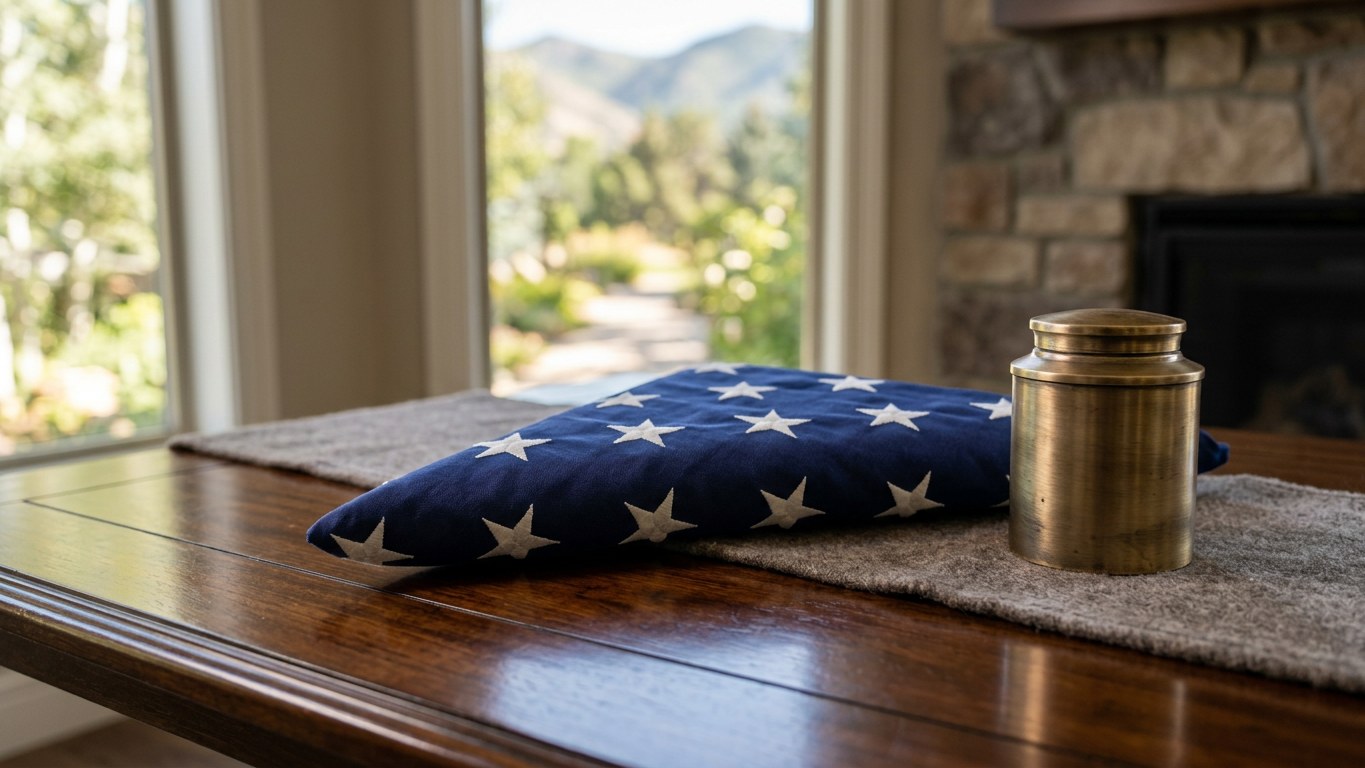
Federal benefits for veterans generally divide into three areas: ceremonial military honors, burial rights within a national or state veterans cemetery, and monetary allowances toward final expenses. Every eligible service member is entitled to military honors at no cost, regardless of where the service takes place.
Military honors typically include an honor guard detail of at least two uniformed service members. During the ceremony, the detail will fold and present the United States flag to the next of kin and play Taps, either through a live bugler or an official ceremonial recording. These honors can take place at a funeral home chapel, a house of worship, or graveside.
For burial in a national cemetery or an approved state veterans cemetery, benefits generally provide a gravesite or columbarium niche, opening and closing of the grave, routine perpetual care, and a government headstone or marker. If your family chooses a private or municipal cemetery instead, the government does not pay for the private burial plot, though you may still receive an engraved headstone, a burial flag, and a Presidential Memorial Certificate. For a broader overview of local options, you can read our guide on what veterans' funeral benefits include in Salt Lake City, Utah.
Determining Who Is Eligible for Military Honors and Burial
Eligibility for veterans funeral benefits depends on the nature and duration of the veteran's military service, as well as their character of discharge. Generally, service members who died on active duty or veterans who were discharged under conditions other than dishonorable qualify for honors and cemetery placement.
Members of the Selected Reserve who completed at least one term of enlistment or were discharged due to a service-connected disability may also be eligible. Spouses and minor dependent children of eligible veterans often qualify for burial in a national or state veterans cemetery, even if they pass away before the veteran. Spousal eligibility generally includes interment alongside the veteran, perpetual care, and inscription on the shared marker.
Because rules and federal statutes can evolve, families should confirm specific eligibility guidelines with their funeral director or through the Department of Veterans Affairs. If a discharge was other than honorable, there are sometimes administrative reviews or exceptions, especially if service-connected conditions played a role.
The Key Document: Locating and Using the DD Form 214
To request military honors or cemetery placement, the single most critical document is the veteran's certificate of release or discharge, most commonly known as the DD Form 214 (or equivalent discharge paperwork for earlier eras of service). This paper verifies active duty service dates, branch, and character of discharge.
If you have this document at home, keep it in an accessible location alongside important family records. If the document cannot be located when death occurs, do not panic. Funeral directors frequently assist families in requesting expedited service records from the National Archives or the state department of veterans affairs.
Having certified copies of birth certificates, marriage certificates (for spousal benefits), and death certificates will also be necessary when filing claims for monetary allowances or arranging cemetery property. Taking time to locate these records in advance removes an immense burden from grieving family members later.
Cemetery Options in Utah: State, National, and Private Grounds

In Utah, families have meaningful choices regarding where their veteran rests. The Utah Veterans Cemetery & Memorial Park, located in Bluffdale near Camp Williams, serves as a state-operated resting place that mirrors national cemetery standards. It offers casketed burial, cremation placement, and memorial grounds with sweeping mountain views.
When an eligible veteran is interred at a state or national veterans cemetery, the plot, vault or liner (if required by cemetery regulations), opening and closing, and marker are covered by government programs for both the veteran and qualifying dependents. These cemeteries provide dedicated maintenance and an environment surrounded by fellow service members.
Many families prefer burial in a local municipal cemetery or private family estate near home. In those instances, the family purchases the plot and cemetery services directly. However, the Department of Veterans Affairs will still supply an official headstone, medallion, or niche marker at no charge to place on the private grave, and military funeral honors can be conducted right at the local gravesite. Learning more about caring for a veteran through experienced local planners helps ensure every coordinate is handled smoothly.
Understanding VA Burial Allowances and Reimbursements
A common misconception is that the Department of Veterans Affairs pays for the entire funeral bill. The VA does not write a single check to cover general funeral director services, private caskets, or reception luncheons. Instead, the government provides specific monetary reimbursements, called burial allowances, to eligible surviving families under certain conditions.
Burial allowances are generally available if the veteran was receiving a VA pension or disability compensation at the time of death, died while hospitalized under VA care, or died as a result of a service-connected disability. The amount of reimbursement varies depending on whether the death was connected to military service and whether burial occurs in a private cemetery.
Because reimbursement amounts and regulatory criteria are updated periodically, you should check current figures and documentation requirements with your funeral home or the VA directly before relying on specific numbers. Claims must typically be filed within specific timeframes following the burial or cremation, accompanied by paid receipts and death certificates.
Step-by-Step: How to Claim Your Veteran's Benefits
Claiming benefits does not need to feel overwhelming if you take each requirement one step at a time. Your funeral director will typically manage the operational arrangements for honors and cemetery scheduling on your behalf.
1. Gather Service Paperwork
Find the veteran's DD-214 or discharge certificate. If you cannot find it, provide your funeral director with the veteran's full legal name, Social Security number, branch of service, and estimated service years so they can initiate an urgent archive request.
2. Decide on Burial or Cremation
Determine whether the service will involve traditional casket burial or cremation. Veterans benefits apply equally to both choices, including placement in ground plots, columbarium niches, or memorial markers. If you are considering personal arrangements ahead of time, pre-planning a funeral ensures your exact preferences regarding service branch and honors are recorded clearly.
3. Choose the Cemetery and Service Location
Select whether the committal will take place at the Utah Veterans Cemetery in Bluffdale, another veterans cemetery, or a private family lot. Communicate your preference for the military honors ceremony, such as having the flag presented at the mortuary chapel or at the graveside.
4. Coordinate the Honor Guard
Your funeral director will contact the appropriate military branch casualty assistance office or local veteran service organizations to schedule the rifle detail, bugler, and flag-folding personnel. They will also secure the burial flag from the United States Postal Service or the VA.
5. Submit Burial Allowance Claims
After the services conclude and the certified death certificates are issued, submit VA Form 21P-530 (Application for Burial Benefits) along with receipts showing who paid for funeral and cemetery expenses. Your funeral home or a county veterans service officer can assist with the paperwork.
Caring for the Family Beyond the Ceremony
Honoring a veteran's legacy is about more than just military protocols; it is about providing steady support to the loved ones left behind. The transition following the death of a spouse or parent involves many practical and emotional adjustments.
In addition to funeral honors, surviving spouses may be eligible for continuing benefits, such as VA dependency and indemnity compensation, survivor pensions, or bereavement counseling through VA Vet Centers. Local community groups and family-focused care providers also offer support networks to help through the weeks and months that follow.
Every veteran answered the call to serve, and their family shared in that sacrifice. Ensuring that military rites, flag presentations, and cemetery placements are conducted with quiet reverence is a solemn obligation that community caretakers hold dear.
Gentle Guidance for Your Next Steps
Understanding veterans funeral benefits helps ensure that your family claims every honor and reimbursement earned through service. Whether you are arranging an immediate service or simply preparing for the future, you do not have to navigate these procedures by yourself.
If you have questions about scheduling military honors, locating service records, or coordinating with the Utah Veterans Cemetery, the compassionate staff at Larkin Mortuary are always here to assist. Please feel free to reach out to us through our contact page or call our team at any time for unhurried, thoughtful support.
Frequently asked questions
Does the VA pay for the entire funeral and casket?
No, the VA does not cover the complete cost of a funeral or pay directly for private caskets. It provides ceremonial military honors and a burial flag at no charge, cemetery property in national or state veterans cemeteries, and potential monetary burial allowances for eligible service members.
What paperwork is required to arrange military funeral honors?
The primary document needed is the veteran's military discharge record, most commonly the DD Form 214. If you cannot find this document, your funeral director can assist in requesting official service records from the National Archives.
Can a veteran's spouse be buried in a veterans cemetery?
Yes, eligible spouses and minor dependent children are generally entitled to burial or niche placement in a national or state veterans cemetery alongside the veteran. This benefit includes the plot, opening and closing services, and inscription on the headstone.
Do veterans benefits apply if the family chooses cremation?
Yes, veterans benefits apply equally to burial and cremation. Eligible veterans who are cremated can receive full military honors, placement in a veterans cemetery columbarium niche or urn garden, and an official memorial marker.
Can military honors be held at a private cemetery or church?
Yes, military honors can be conducted at private cemeteries, funeral home chapels, churches, or outdoor venues. An honor guard detail will travel to the chosen location to fold and present the flag and sound Taps.