
Attending a service for someone who has died can bring quiet questions, especially if it has been some time since you last attended one. Wondering what to wear to a funeral in Utah or what will happen once you step through the doors is natural. Modern gatherings balance long-standing community traditions with more relaxed, personal remembrances.
You do not need to memorize strict rules to show care. What matters most is arriving with a kind presence and respect for the people who are grieving. Knowing a few gentle expectations can help ease any uncertainty so you can focus entirely on supporting the family.
Understanding What to Wear to a Funeral in Utah Today

For generations, funeral attire meant formal black suits and dark dresses. While dark, modest clothing remains appropriate and welcome, modern expectations have broadened across the Salt Lake Valley and Northern Utah. Today, the guiding principle is simple respect rather than strict formality.
Business casual or dress attire in subdued tones is common. In addition to black, shades such as navy, slate gray, deep green, brown, and soft earth tones are fitting choices. You might choose tailored slacks, a collared dress shirt, a modest dress, or a blouse with a skirt or trousers. Ties and jackets are always appropriate, but they are rarely mandatory unless requested by the family.
It is best to avoid overly bright neon colors, graphic t-shirts, athletic wear, beachwear, and heavily torn denim. The goal is to dress in a way that honors the moment and keeps the focus where it belongs: on the person being remembered and the family carrying grief. If an obituary notes that attendees should wear a specific bright color or sports jersey to honor a loved one's passion, feel free to follow that wish.
Accounting for Utah Seasons and Local Venues
Utah weather often shapes what attendees wear, particularly when services include a graveside gathering. Winters along the Wasatch Front can bring snow, ice, and biting winds to open cemetery grounds. In cold months, practical warm layers, a wool coat or dark parka, gloves, and sturdy, flat-soled boots are sensible and respected.
Summer afternoons in Salt Lake, Davis, and Utah counties can bring intense heat. Breathable fabrics like cotton or linen blends help you stay comfortable while keeping a modest appearance. If you plan to attend a dedication or brief service at the cemetery, consider sunglasses, a dark umbrella for shade or sudden rain, and shoes that will not sink into soft grass.
Venue traditions also guide attire. Services held in ward chapels of The Church of Jesus Christ of Latter-day Saints, Catholic parishes, synagogues, or other religious sanctuaries usually see traditional Sunday dress. Outdoor or secular gatherings, such as a gathering at an event center or home, may lean slightly more relaxed. If you are ever unsure about cultural or faith customs, learning about funeral services in Salt Lake City for every faith and tradition can provide helpful context.
The Difference Between a Visitation, Viewing, and Funeral Service
Many families hold multiple gatherings, and each serves a distinct purpose. Knowing which part of the service you are attending helps you know how to spend your time and when to arrive.
- A viewing or visitation: This is an unstructured time, often held the evening before the funeral or in the hour just before the chapel service. It allows relatives, neighbors, and colleagues to step in, greet the family, and offer condolences in person. There is rarely a set program. Guests arrive, wait patiently in line to speak with the immediate family, and stay for fifteen to thirty minutes. If the casket is open, you may choose to approach it for a quiet moment of reflection, but doing so is entirely optional.
- The funeral service: This is a structured ceremony held in a chapel, sanctuary, or mortuary. It generally includes opening remarks, music, prayers or readings, and one or more eulogies. Guests sit quietly, listen, and participate in songs or silent reflections as they feel comfortable.
- A celebration of life: Some families choose a less traditional format centered on storytelling, shared meals, and favorite music. If you are attending a gathering titled this way, our guide on celebration of life vs funeral differences explains what to expect during these informal remembrances.
- The graveside service: Following a funeral, attendees may follow the procession to the cemetery. A graveside service is typically brief, lasting ten to twenty minutes, and may conclude with a prayer, scripture reading, or military honors for a veteran.
What to Say When Greeting the Family
Walking up to someone who has just lost a spouse, parent, or child can leave even close friends feeling tongue-tied. It is common to worry about saying the wrong thing. In truth, the family will remember your presence far more than your exact words.
Keep your message brief, sincere, and gentle. A few heartfelt phrases are always appropriate:
- "I am so sorry for your loss. It means a great deal to be here with you today."
- "Your mother was so kind to our family. We will miss her dearly."
- "I am holding you and your family close in my thoughts."
Avoid trying to explain the death, minimize the pain, or offer platitudes such as "they are in a better place" or "everything happens for a reason." While meant with kindness, these phrases can unintentionally hurt someone in early shock. If you wish to offer deeper, ongoing support in the weeks ahead, you can read our thoughtful suggestions on how to help a grieving friend.
Modern Etiquette: Technology, Arrival, and Guest Books
Etiquette at modern viewings and funerals is rooted in courtesy and awareness of those around you. Arrive ten to fifteen minutes before a scheduled chapel service begins. This allows you time to sign the memorial register, find a seat, and settle without interrupting the family's entrance.
Always silence your phone or turn it off entirely before entering the building. Photos are generally discouraged inside a viewing room or chapel unless the family has specifically invited guests to take pictures near a memorial display. Never take photographs of an open casket or of grieving family members.
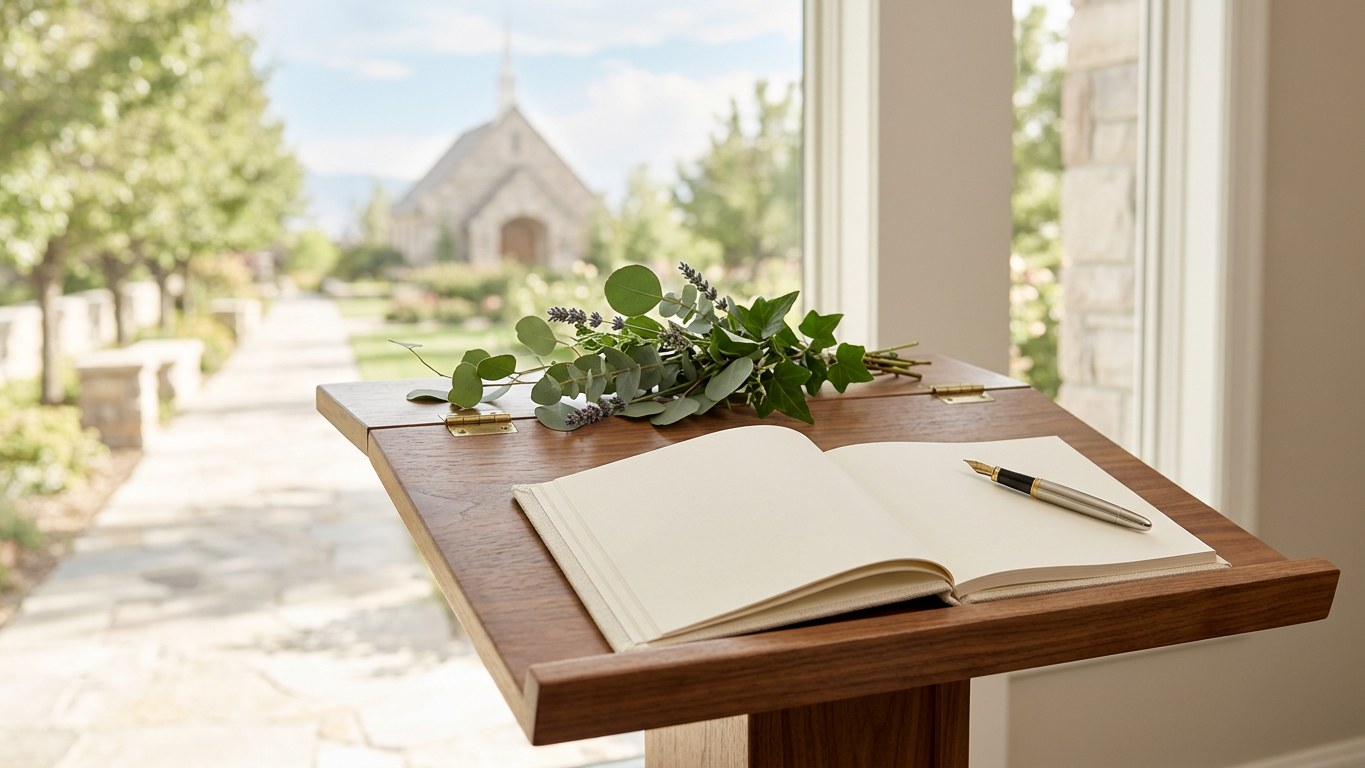
Take a moment to sign the guest book near the entrance, writing your first and last name clearly. If your relationship with the deceased is through work, a club, or a neighborhood rather than direct family ties, adding a brief note like "neighbor from 9th East" or "coworker from the hospital" helps the family recognize who came when they review the book later.
Bringing Children to a Service
Families often wonder whether young children should attend a viewing or funeral. In Utah, community and extended family life often include children at gatherings of all kinds. Their presence can bring genuine comfort to grieving adults, reminding everyone of the steady continuation of life.
Before you arrive, explain to your child in simple terms what they will see. Let them know people might cry, that there may be soft music, and that everyone speaks in quiet voices. If you are attending an open-casket viewing, let the child decide whether they want to walk near the front; never force them to view or touch the casket.
Sit near an aisle or back door during the service. If your child becomes restless or distressed, you can easily step out into a foyer or quiet hallway without drawing attention away from the speaker. Bringing a quiet, non-electronic activity such as a coloring book can help younger hands stay occupied.
Finding Peace in Being Present
At its heart, attending a funeral is simply about showing up for another person in one of life's hardest moments. You do not need the most formal suit or a perfectly scripted speech. Modest clothing, quiet steps, and a warm handshake or embrace are all that is asked of you.
If you have questions about arrangements, services, or preparing for an upcoming gathering, the caring staff at Larkin Mortuary have served Utah families with quiet guidance since 1885 and are always here to help.
Frequently asked questions
Do I have to wear black to a Utah funeral?
No, black is no longer mandatory. Subdued tones such as navy, gray, brown, deep green, or soft earth tones in business casual or modest dress styles are widely accepted.
What is the difference between a viewing and a funeral?
A viewing or visitation is an open, informal window of time where guests drop in to speak with the family and pay their respects. A funeral is a seated, structured service with speakers, music, and eulogies.
How long should I stay at a viewing or visitation?
Most guests stay for fifteen to thirty minutes. You typically wait in line to greet the immediate family, spend a moment reflecting or viewing memory boards, and then quietly depart.
Is it appropriate to bring young children to a memorial service?
Yes, children are welcome at most community services. It helps to prepare them in advance for quiet voices and tears, and to sit near an aisle in case you need to step outside.
Should I approach an open casket if one is present?
Approaching an open casket is entirely optional. You may walk up to pay silent respects, or you may choose to remain in the seating area after greeting the family.